


Walk down any main street right now and look at the windows. The pizza place. The taco truck. The nail salon. The hot dog stand on the corner. A lot of those posters look exactly the same. Same glossy food. Same glowing letters. Same dramatic smoke and sparkles that nobody asked for.
That is not a coincidence. A lot of small business owners are typing “make me a poster for my hot dog stand” into an AI image generator, sending whatever comes out straight to the print shop, paying real money to print it, and hanging it up. It feels like a win. No designer, no waiting, no invoice.
Here is the problem. Your customers can tell. And a lot of them are quietly deciding not to walk in.
This is one of those mistakes that stays silent. Nobody comes up to the counter to tell you your poster looks cringe. They just keep walking. You never see the sale you lost, so you never connect it back to the poster.
We already wrote about why you should not use AI to create your logo. Posters, menus and flyers are the same story, just printed bigger and hung in public where everyone can see them.
Key Takeaways
Is it a mistake to use AI to design your poster or menu? In most cases, yes. A poster made from a basic one line prompt looks like every other AI poster in your area, customers trust it less, and AI food photos promise something your real food cannot deliver.
- Generic AI posters all look alike because they come from the same kind of short prompt.
- People trust brands less once they can tell AI made the visuals. In a June 2026 Clutch survey, 55% said they view a brand less favorably when they can tell AI produced the creative.
- AI food looks too good to be true. When the real hot dog shows up, the trust is gone.
- The money you save on design can disappear in printing, reprinting and customers you never see.
- If you truly have no design budget, feed your AI tool 10 real references, keep the type simple, and use photos of your actual product.
Why Every AI Poster in Your Area Looks the Same
AI image tools are built to give you the most likely picture for the words you typed. Type “poster for a burger restaurant” and you get the average of every burger poster the tool has ever seen. Like we said in our logo blog, AI does not imagine. It predicts.
Now think about who else is typing that same sentence. The burger place two blocks down. The food truck at the farmers market. The diner across town. You all get the average. So you all end up with the same poster.

And average is the enemy of marketing. The whole job of a poster is to make someone stop walking. If yours looks like the one hanging next to it, it is not a poster anymore. It is wallpaper.
This is already happening in real life. Food content specialist Mark Kurlyandchik described a food festival where about 70% of the vendors used AI signage, and said it “just all blended into one thing” (The Detroit News, via The Star). Picture paying for a booth and a banner and still being invisible.
The Silent Mistake: Customers Notice and Spend Somewhere Else
This is not just us being designers who do not like AI. The research keeps pointing the same way. When people can tell a brand used AI for its visuals, they like that brand less and buy from it less.
| Study | Who they asked | What they found |
|---|---|---|
| Clutch, September 2026 | 601 consumers, August 2026 | 53% are less likely to buy from brands they know use AI in social media content. 64% would trust a brand less if its products were misrepresented with AI. |
| Clutch, June 2026 | 408 U.S. consumers | 55% view a brand less favorably once they can tell AI made the creative. 78% feel more favorable when the visuals are hand illustrated. |
| Optimizely, September 2026 | 1,000 UK consumers | 62% trust marketing less since brands started using AI. 57% say they can usually tell when content is AI generated. |
| Gartner, March 2026 | 1,539 U.S. consumers | Half prefer brands that avoid generative AI in the content customers see. |
| NielsenIQ, December 2024 | 2,000+ people watching AI video ads, about 150 with brain scans | People picked out most of the AI ads on instinct and found them more annoying, boring and confusing. Even the good ones were less memorable. |
Now, to be fair, people are not perfect AI detectors. In a 2025 Clutch test, 66% of people felt confident they could spot an AI photo, and 57% got it wrong. But think about what that means for you. The polished AI images that fool people are not the ones on most small business posters. The ones on your street came from a one line prompt, and those are the easiest to spot. And even the ones that fool people get caught the second the real product shows up.
This is only going to get worse. Every month more people make AI images themselves. Once you have generated a few, you start seeing that look everywhere. The crowd that can spot your AI poster from across the street is growing, not shrinking.
The worst part is that you will never get a complaint. You get a customer who glances at your window, gets a weird feeling, and walks into the place next door. That lost sale never shows up in any report.
Your Hot Dogs Look Too Good to Be True
AI food is perfect in a way real food never is. Every sesame seed lined up. A cheese pull that breaks the laws of physics. A hot dog so shiny it looks like it was dipped in varnish. A corn dog with a golden crust no fryer on earth has ever made.

When a customer sees that, only two things can happen. They think “that is fake” and stop trusting you. Or they believe it, walk in, and get a real corn dog that looks nothing like the poster. Either way, you lose.
There is science behind the weird feeling too. Researchers at Germany’s University of Duisburg-Essen found that slightly off AI food images feel more uncanny and less pleasant to people. In a later study, people wanted to eat the AI food less, even when they rated it the same nutritionally (CNN, via KEYT).
And the backlash is real. A few examples from 2026 alone:
- Grind & Unwind, San Francisco. The new cafe put a big board of AI food photos in its front window. Locals mocked it online, someone spray painted the storefront, and the owners took the board down and paid a reported $700 to paint over the graffiti (PetaPixel).
- Spicer Orchards, Fenton, Michigan. The farm pulled its AI signage in September after customers complained (The Detroit News, via The Star).
- Just Eat. The delivery app apologized in October and paused its AI menu photos after customers shared images like bacon floating in a soda (PetaPixel).
Nancy Hopkins, president of the International Association of Culinary Professionals, put it simply: “I think it backfires if you’re a little startup restaurant.” Her advice was to use simple illustrations or your own phone photos instead (CNN, via KEYT).
We agree. A real photo of your real hot dog, taken on a decent phone in good daylight, will beat a fake perfect one every single time. People want to know what they are actually getting.
Red Flags That Scream “AI Made This”
Some design choices are instant giveaways. If your poster has any of these, people will clock it as AI before they even read your offer.


- Halloween style lettering. Drippy, jagged, spooky letters on a poster for a pizza special. Unless you are actually throwing a Halloween party, this is the number one tell.
- Scratched letters filled with a texture. Text that looks cracked, distressed or carved, then filled with fire, lava, gold or a gradient. It looked edgy the first time. Now it is on every corner.
- Glossy 3D text with a glow. Thick shiny letters with a bevel and a neon rim light, like the title card of a video game.
- Everything glows. Lens flares, sparkles, smoke and splashes coming from nowhere. Real life does not have this much lighting.
- Waxy, plastic looking food. Too smooth, too shiny, too saturated. Food that looks like a toy model of food.
- Text that almost makes sense. Misspelled words, letters melting into each other, or gibberish in the small print. The newer tools are better at text, but the fine print still breaks often.
- Objects that do not add up. A fork with too many prongs, a burger with three bottom buns, a hand with six fingers holding your drink.
- No hierarchy. The background is doing a lot, but your hours, address and price are tiny, buried or missing.
- A dramatic background that is not your place. A neon city at night or an explosion of ingredients, when your shop is a cozy spot with brick walls.
One of these alone might slide. Three or four together and your poster is basically wearing a sign that says “we did not care enough to make this ourselves.” And if you did not care about your poster, people start wondering what else you did not care about.
You Are Not Actually Saving Money
We get why people do it. Hiring a designer feels like a cost you can skip, and the AI tool is right there. But look at where the money actually goes.
You skipped the designer, but you still paid the printer. The window vinyl, the banner, the 500 menus, the sandwich board. Now you have paid to put a message in front of every person who walks by, every single day. If that message says “generic” or “fake,” you paid to push customers away.
Then comes the reprint. Most owners figure it out eventually, and they pay to print everything again. Grind & Unwind did not just lose the cost of their AI board. They also paid around $700 to clean graffiti off the front of the building and rebuilt their window display.
And then there is the cost nobody tracks. Here is a simple example. Say your poster turns away just 3 people a day who would have spent $12 each. That is $36 a day, about $1,080 a month, and over $13,000 a year. Those are made up numbers, but run them with your own and see how fast it adds up.
The design was never the expensive part. The customers you lose without knowing it are.
No Budget for a Designer? How to Use AI Without Looking Like Everyone Else
We are not going to pretend every business can hire a designer tomorrow. If you are going to use AI anyway, the fix is simple: stop giving it a one line prompt. The more specific you are, the less your poster looks like the average.
- Pull up 10 inspirations. Find 10 posters, menus, packages or signs you actually love. Look on Pinterest and Behance, take photos of posters you see in real life, and look outside your industry. A coffee shop can steal a vibe from a record store. If all 10 come from businesses just like yours, you will end up looking like them.
- Write down what you like about each one. The colors on one. The layout on another. The hand drawn lettering on a third. This is your creative direction.
- Give the references to your AI tool as the foundation. Do not ask it to “design a poster.” Upload your references and tell it exactly what to take from each one. Just by doing this, you are already different from everyone else in town.
- Use photos of your real product. Take the photo yourself and leave space for it in the design. Never let the AI invent your food.
- Keep the text short, and add it yourself. Headline, one offer, hours, address. Put the text on in a simple design tool so it is spelled right and easy to read from across the street.
- Stay away from the red flags. No Halloween letters, no scratched text filled with fire, no glowing 3D type.
- Use references for inspiration, not copying. Borrow a direction, not someone else’s design. Copying another business’s poster can land you in legal trouble and makes you look like them anyway.
- Test before you print. Show it to 5 people and ask two questions: what is this for, and does it look AI? Then print one copy, hang it, and look at it from across the street before you order 500.
Here is a prompt you can copy and change for your business:
I'm attaching 10 reference images. Use them as the foundation for a new poster for [business name], a [type of business] in [town].

Take the color palette from references 2 and 7, the layout from reference 4, and the hand drawn lettering style from reference 9.

The only text on the poster: [headline], [one line offer], [hours], [address].

Use a clean, readable typeface. No glowing effects, no 3D text, no distressed or scratched lettering, no generated food. Leave an empty area on the left where I will place a real photo of our product.
Quick Checklist Before You Send It to Print
Run through this before you pay a printer a single dollar.
- Could you swap your business name for a competitor’s and nobody would notice? If yes, start over.
- Does the food or product look exactly like what you actually sell?
- Is every word spelled right, including the small print?
- Can you read the headline, hours and address from 10 feet away?
- Are there zero glowing, dripping, scratched or 3D letters?
- Does it match your logo, colors and the feel of your space?
- Is the file big enough for the print size? Most AI tools give you a flat image, not a print ready file. Blown up to a banner, it gets soft and blurry.
- Did someone outside your business look at it and not say “is that AI?”
It Is the Same Mistake as an AI Logo
If this sounds familiar, it is because we said a lot of the same things in Why You Should Not Use AI to Create Your Logo. AI logos tend to look like your competitors, come out as low quality image files, and age fast. AI posters have every one of those problems, plus one more: they get printed big and hung in public.
Think of it this way. Your logo is the foundation of your brand. Your posters, menus and flyers are where that brand actually meets the street. When the logo is AI and the poster is AI, your whole business starts to look like a template. Nothing about it says you.
The businesses people remember have a look that is clearly theirs. Same colors, same type, same personality on the logo, the menu, the window and the cup. That consistency is what makes someone recognize you from across the street. A random AI poster breaks it every time.
If you are weighing the cost of doing it right, our breakdown of how much a logo costs in 2026 is a good place to start.
Frequently Asked Questions About AI Generated Posters
If you use a basic one line prompt, usually yes. You get a poster that looks like everyone else’s, and surveys show many customers trust brands less once they can tell AI made the visuals. If you use AI at all, give it real references and use photos of your actual product.
Not always, but the generic ones are easy to spot. Glowing 3D text, Halloween style letters, waxy food and garbled small print give it away fast. And even when the image fools someone, the real product gives it away the moment it shows up.
No. A menu photo tells customers what they are about to get, so a fake one sets them up to be disappointed. In 2026 alone, a San Francisco cafe, a Michigan farm and the delivery app Just Eat all pulled AI food images or signage after customers pushed back. A real photo on a good phone is the safer choice.
Start with 10 reference designs you actually like and tell the AI exactly what to take from each one. Use your own product photos, keep the text short, add the text yourself, and skip the glowing, dripping and scratched lettering.
Up front, yes. Over time, often not. You still pay for printing, you may pay to reprint once you notice the problem, and you never see the customers who walked past.
Often not at large sizes. Most AI image tools give you a flat image at a limited size, not a print ready file with editable text. Stretched to a banner or window graphic, it can get soft and blurry.
AI is useful behind the scenes. Use it to brainstorm headlines, explore color ideas, build a mood board or resize something you already have. Just do not let it be the final thing your customers see.
Want Posters People Actually Stop For? We Can Help
At Rootless Agency, our graphic design team designs the things small businesses put out into the real world. Posters, menus, flyers, brochures, signs, banners, window graphics and trade show displays. Every piece is built around your brand, not around whatever an AI tool thinks a “restaurant poster” should look like.
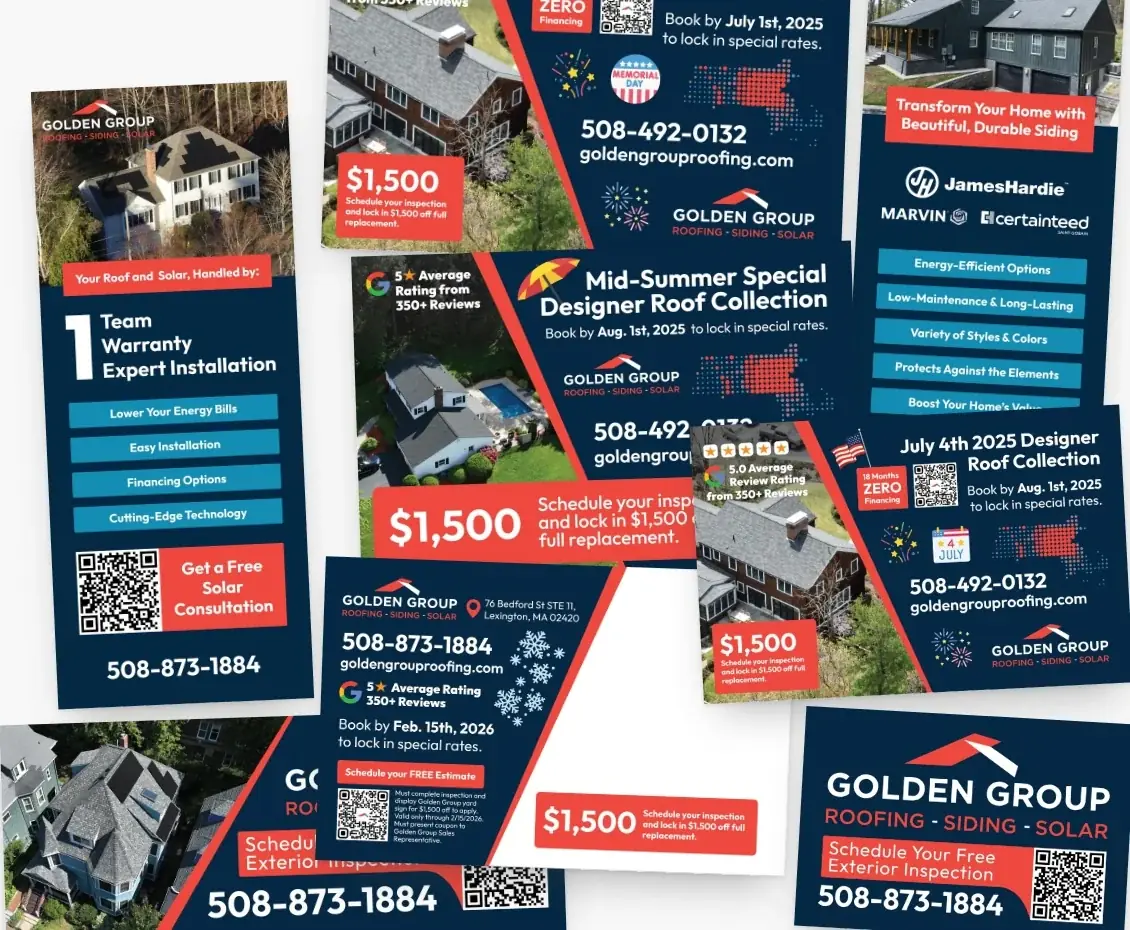
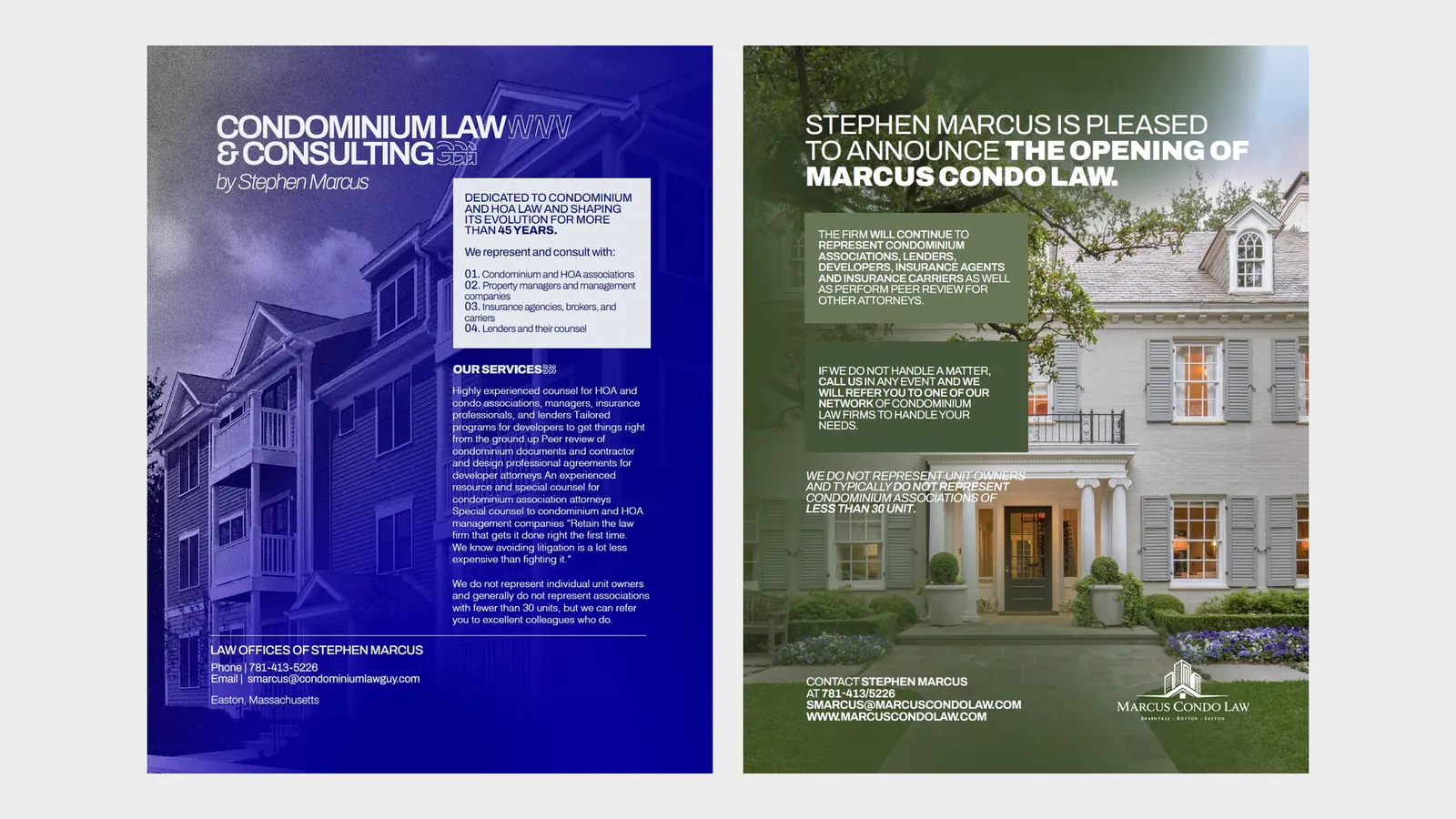
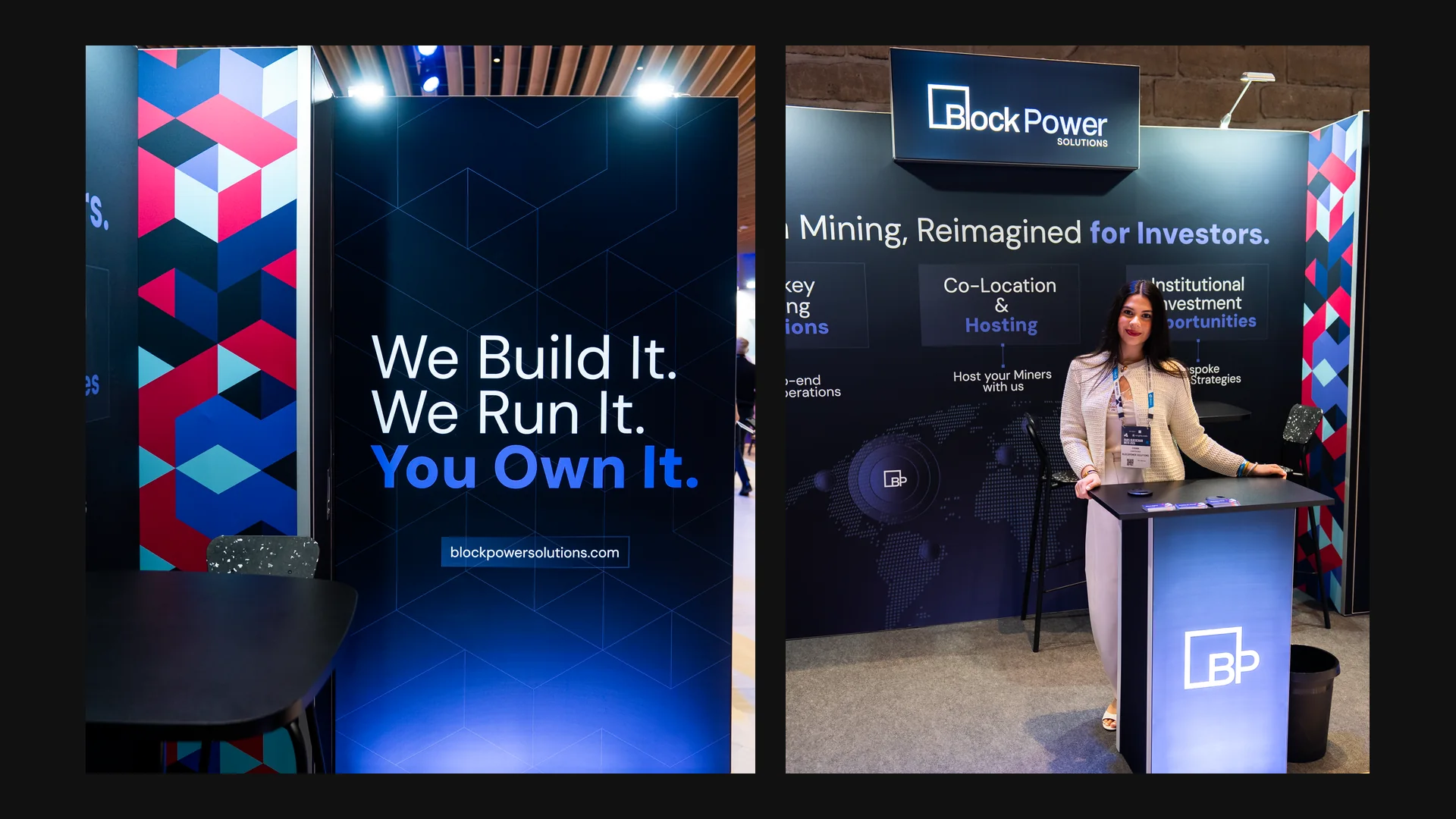
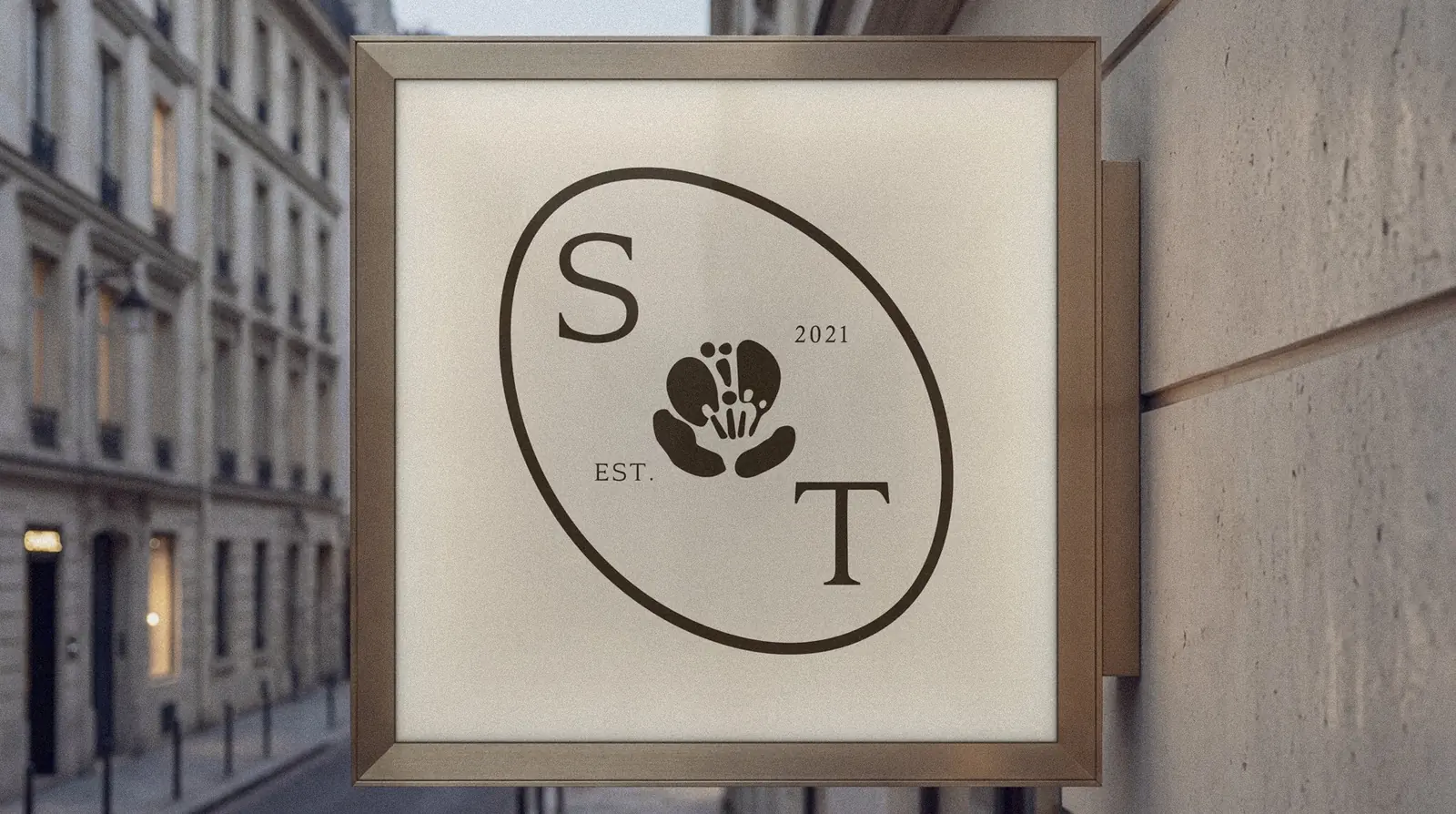
Here is what you get that a prompt cannot give you:
- A design that is clearly yours. It matches your logo, your colors and the feel of your space, so people recognize you from across the street.
- Your real product, shown honestly. No fake hot dogs. We design around real photos, so what people see is what they get.
- Print ready files. The right size, the right resolution, editable text. We also work with print partners, so your materials show up finished and correct.
- A team that knows what looks AI. We see these posters every day, and we know how to make sure yours never gets mistaken for one.
And if your logo came out of an AI generator too, it might be time to fix the foundation first. Take a look at our logo design work.
Whether you are in Boston or anywhere else, book a free discovery call and tell us what you are working on. Before you pay to print your next poster, let’s make sure it is bringing people in, not sending them next door.
Sources
- Clutch Report: 53% of Consumers Are Less Likely to Buy From Brands Using AI on Social Media, Clutch, September 8, 2026
- Clutch Report: Consumers Are Rejecting AI Creative, Proving the Value in Human-First Branding, Business Wire, June 2026
- Clutch Report: 57% of Consumers Can’t Spot AI Photos, Business Wire, September 2025
- Six in 10 consumers say AI has made brand marketing less trustworthy, Optimizely, September 22, 2026
- Gartner survey: 50% of consumers prefer brands that avoid GenAI in consumer-facing content, Gartner, March 16, 2026
- NIQ research uncovers hidden consumer attitudes toward AI-generated ads, NielsenIQ, December 12, 2024
- Appalling AI menu pictures keep going viral, but what makes them so revolting?, CNN via KEYT, September 2, 2026
- San Francisco Restaurant Defaced Over AI-Generated Food Photos, PetaPixel, July 22, 2026
- Food Delivery App Apologizes for AI-Generated Menu Photos Showing Bacon Floating in Soda, PetaPixel, October 21, 2026
- Restaurants, let’s talk about those AI menus and marketing materials, The Detroit News via The Star, October 24, 2026


